FloriDUH Data Centers

On drought, aquifers, and the genius of turning server cooling into a groundwater policy
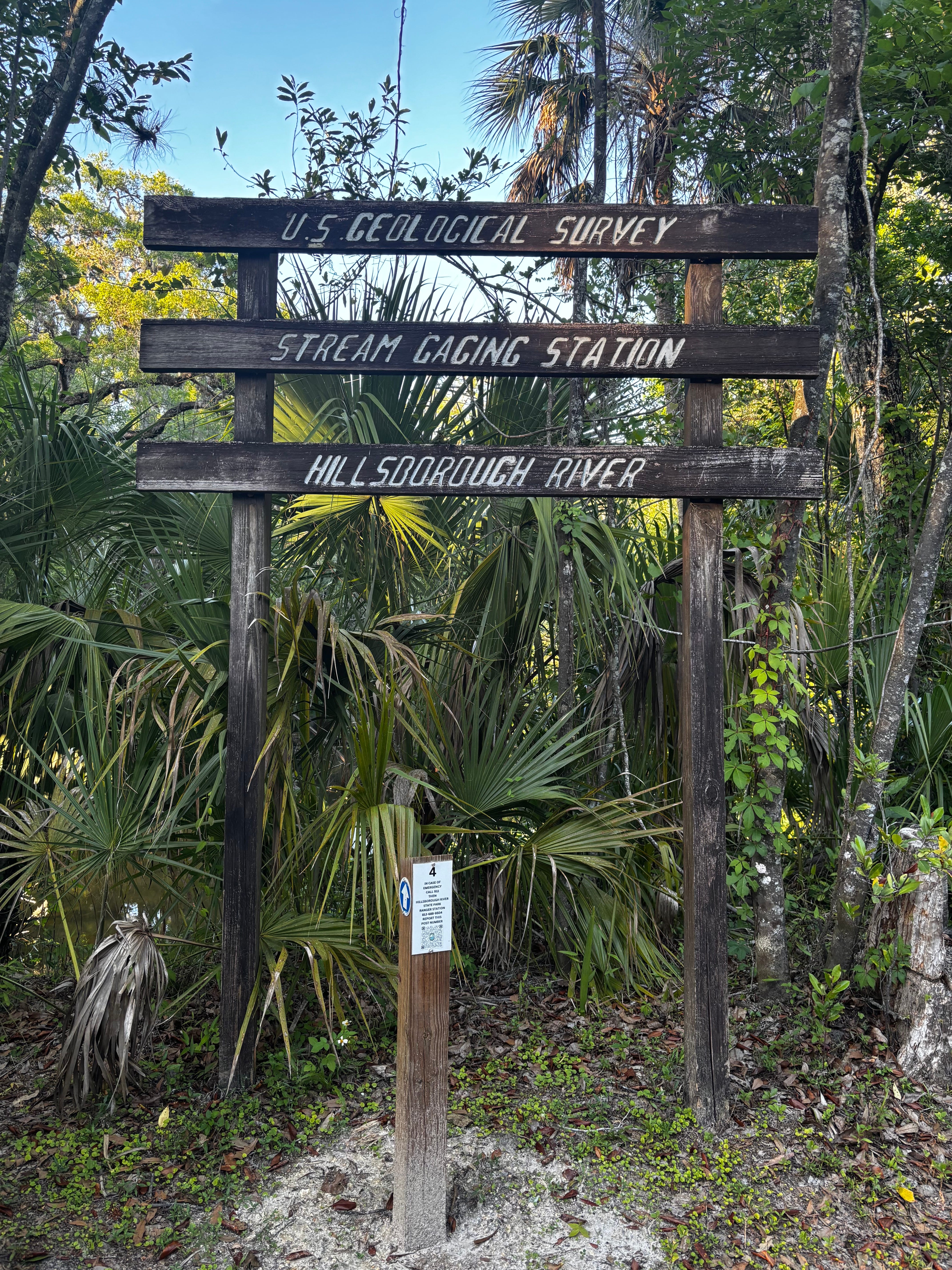
Florida is trying to do the dumbest possible thing with the wrong possible resource at the worst possible time.
That is the clean version.
The state sits on a karst aquifer system that is already doing too many jobs at once: drinking water, spring flow, river support, agricultural demand, industrial withdrawals, and geological buffering in limestone country. And now, in the middle of severe drought and active water-shortage declarations, Florida is entertaining large-scale data-center cooling as another claimant on that system. That is not modernization. That is a short-horizon development reflex mistaking aquifer resilience for spare capacity.
The strongest version of the argument is not melodrama. It is much simpler.
A drought-stressed state whose groundwater supports both public water supply and spring-fed ecosystems should not be casually adding new high-load industrial cooling demand unless that demand can prove, up front, that it does not worsen the public water situation. In Florida, that means reclaimed water first, lower-water cooling where possible, and a presumption against default groundwater use in stressed basins. Anything less is a decision to let server infrastructure compete with the basic hydrologic life-support system of the state.
The current drought data makes that harder, not softer.
The Suwannee River Water Management District declared a Phase II Water Shortage in March 2026, saying districtwide aquifer levels were around the 20th percentile and all district counties were in Extreme Drought as of March 5. In April, the district announced a Modified Phase II Water Shortage, stating that all river and spring flows were below the 25th percentile and the districtwide Upper Floridan aquifer level remained below the 20th percentile. NOAA’s April 16 Southeast drought update also described the region as facing significant drought impacts, with an exceptionally large share of the Southeast in drought.
That is already a stressed system.
And Florida’s own institutions are quietly telling you this is not business as usual. The Suwannee district’s internal review structure specifically escalates permit applications that include a water allocation for a cloud/AI data center cooling system. Florida’s 2026 SB 484 framework likewise creates a special permitting track for large-scale data centers and explicitly authorizes water management districts or DEP to require reclaimed water as part of consumptive-use approval. You do not build a special statutory and permitting framework for something unless you already know it is a special category of risk.
So the issue is not speculative. The issue is this:
Florida knows large-scale data centers can strain water systems. Florida knows some basins are under shortage conditions. Florida knows cloud/AI cooling withdrawals are serious enough to trigger heightened review. And yet the development logic still runs first. The state is still acting as though industrial growth gets the benefit of the doubt while aquifer protection has to argue its case after the fact.
That sequencing is exactly backward.
The Floridan aquifer is not an abstract underground reserve waiting to be monetized by whoever gets there next. It is one of the most productive aquifer systems in the world and a primary drinking-water source for millions, while DEP separately notes that declining groundwater levels reduce spring flow. In a state where springs, rivers, households, and ecosystems all depend on groundwater, every new high-volume withdrawal is not just an industrial input. It is a governance decision about which functions of the state get treated as negotiable.
And this is Florida, which makes the downside worse.
This is not bedrock country where you can pretend groundwater is just a giant hidden tank. Florida’s karst geology means water levels, spring flow, and structural stability are linked in ways planners love to forget until sinkholes, dry springs, or stressed rivers make the forgetting impossible. Even without making grandiose one-to-one claims about every permit, the basic logic is already bad enough: when a drought-stressed aquifer is under pressure, it is idiotic to treat it like cheap cooling input for politically fashionable compute infrastructure.
That is the deeper insult here.
The data-center pitch always arrives wrapped in future language: innovation, AI, modernization, infrastructure, competitiveness. But the water it wants is ancient, finite in practical terms, and already over-assigned in too many places. So the state winds up doing something absurdly on-brand: selling twenty-first century server growth with sixteenth-century extraction logic.
Take the water. Sort out the consequences later. Call it progress in the meantime.
That is FloriDUH in one move.
And the reason the move feels like a coffin nail is that Florida does not have much correction capacity left. Once drought, growth pressure, ecological decline, and politically protected industrial demand begin stacking, the system does not fail gracefully. It becomes harder to restore spring flows, harder to defend public trust, harder to keep development from outrunning hydrology, and easier for every new demand to be justified by the fact that so much damage has already been normalized. The state teaches itself, over and over, that limits are optional right up until failure becomes undeniable.
So the argument does not need embellishment.
It is already bad enough that a water-shortage district with depressed aquifer levels and weak river and spring flows is treating cloud/AI cooling withdrawals as a live permitting category. It is already bad enough that Florida had to create a special reclaimed-water framework for large-scale data centers because the water burden was obvious. It is already bad enough that the development instinct still seems to be: let the project in, then negotiate the hydrologic consequences around it.
That is not planning.
That is running a drought state like the aquifer is an expendable subsidy.
Florida does not need another clever growth story.
It needs the state to stop treating groundwater like server coolant with a public relations department.
Man this one hits ya right in the feels. Everytime I see the words dead pool effect and map it to Deadpool..
https://www.linkedin.com/posts/jameshood118_humanos-sovereignpilot-uncleentity-share-7453144259798659073-KJZW?utm_source=share&utm_medium=member_android&rcm=ACoAAAKM1ToB5N4SBFihDcjbXS9cvV9QDpVva50